
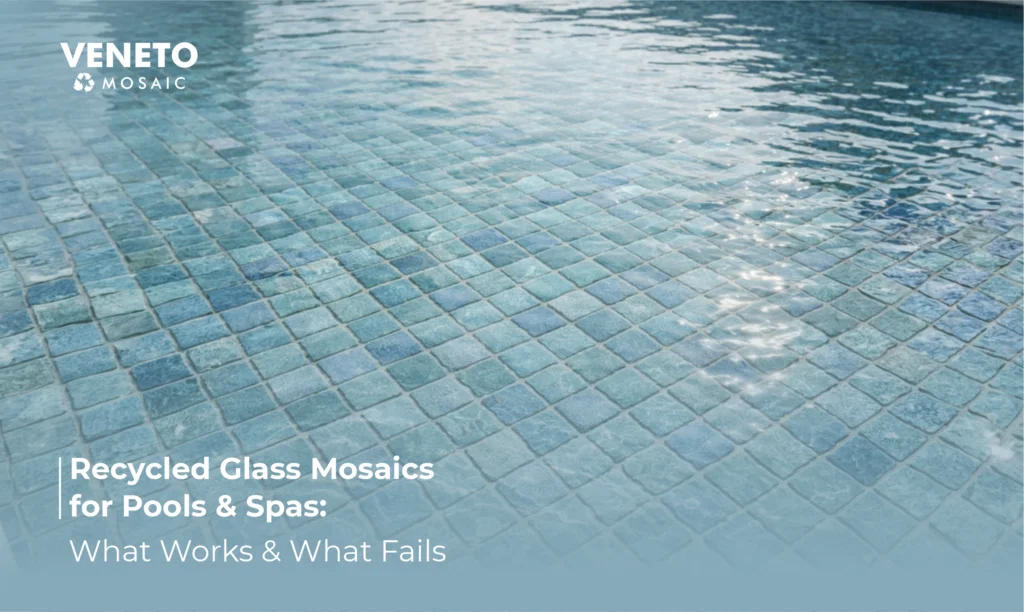
Designing a pool or spa often begins with a visual idea. However, when it comes to selecting recycled glass mosaics for pools and spas, the decision goes beyond appearance. Water exposure, chemical treatment, and installation quality begin to affect how the surface holds up over time. What looks right in a sample board may not hold up in a working pool.
This is where recycled glass mosaics for pools and spas shift from being a design element to a long-term surface decision. Over time, the difference starts to show.
So instead of focusing only on how the surface looks, it helps to understand what continues to work and what starts to fail.
Why Pools and Spas Need a Different Approach
Pools and spas create a very different environment compared to interiors. Surfaces remain submerged or exposed to constant moisture. Cleaning cycles, chemical treatment, and temperature variation continue throughout the life of the space.
Because of this, the materials used here need to remain stable over time. Even small inconsistencies in installation or material selection can show up later.
At the same time, water changes how the surface appears. Colours soften once submerged. Reflections shift as water moves. Therefore, when working with glass mosaics for pools and spas, decisions need to account for how the material holds up and how it looks inside water.
Tile Size and Format: Where It Starts to Work
Tile size influences both the final finish and how easy it is to install.
Smaller mosaic formats adjust easily to curves, steps, and edges. They allow the surface to follow the structure without forcing alignment. As a result, the finish stays even across transitions.
Larger formats may look clean in flat layouts. However, once they meet curves or level changes, they need more adjustments. This often leads to visible cuts or uneven joints.
In most pool and spa designs, smaller formats lead to a smoother outcome. They reduce installation pressure and help maintain continuity across the surface.
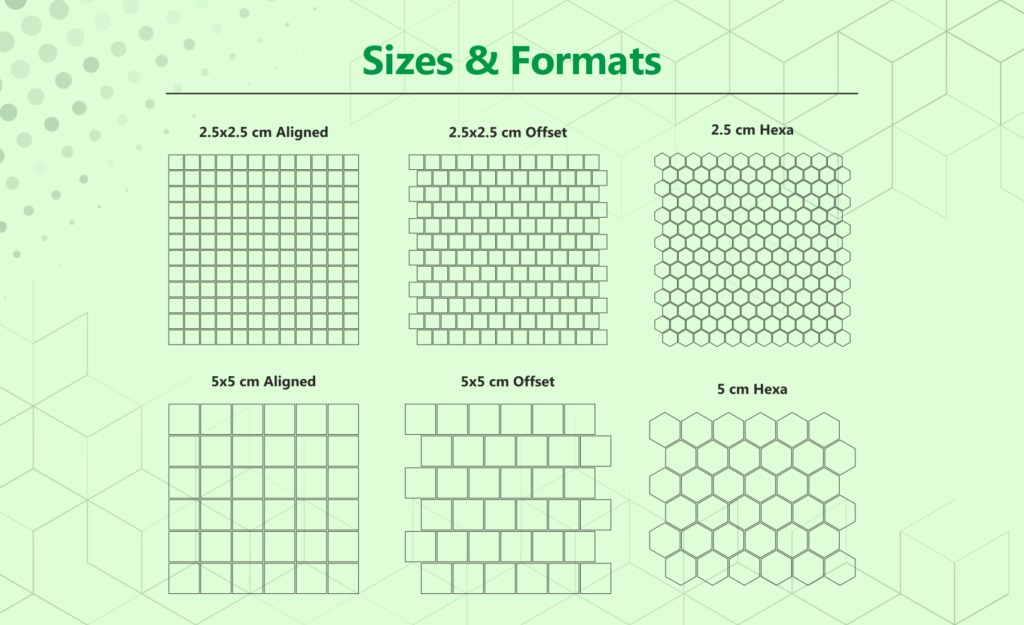
This is where format flexibility becomes useful. Veneto’s recycled glass mosaics offer multiple sizes and layouts that are designed specifically for water-facing applications. Options like 2.5 × 2.5 cm and 5 × 5 cm in both aligned and offset layouts, along with 2.5 cm and 5 cm hexa formats, allow better adaptability across different pool geometries.
Surface Grip: A Practical Consideration
In wet areas, surface grip becomes important. While glass mosaics look smooth, their finish affects how they feel underfoot.
Matte or lightly textured surfaces provide better grip in shallow zones, steps, and entry points. Gloss finishes, although visually sharp, may not suit all areas within the pool.
Therefore, while selecting glass mosaics for pools and spas, it helps to consider where people will walk or stand. The same surface may not suit every part of the pool.
To support this, Veneto’s recycled glass mosaics are available in different surface looks suited for varied pool conditions. Finishes such as Steam Mist, Brake Grip, and Candy Matt work well in areas where grip matters more, while options like Gems Gloss, Jazzy Rainbow, Oxido Metallic, and Neon Glow help achieve specific visual outcomes.
How Colour Appears Inside Water
Colour selection usually happens outside the pool. However, once tiles go underwater, the appearance changes.
Lighter shades reflect more light, which makes the pool feel brighter. Darker tones add depth, although they may reduce visibility in some conditions.
Blended tones create a slight variation across the surface. As water moves, this variation becomes more noticeable.
Instead of relying only on dry samples, it helps to picture how the tile will look inside water. In many cases, collections such as Veneto’s recycled glass mosaics are developed with this in mind, where colours are designed for actual pool and spa conditions.
With a palette of over 80 colours, the range allows flexibility while still maintaining consistency across applications.
Installation: Where Most Problems Begin
Installation determines how well the surface performs over time. Many issues do not come from the material itself. They begin with how the tile gets installed.
Adhesive selection becomes critical. Glass mosaics require compatible thinsets that support proper bonding. Using the wrong adhesive weakens the installation gradually.
Backing systems also affect performance. Some mounting systems allow better contact between tile and substrate. For example, Veneto’s LinkTec back-mounted sheets create a higher bonding area, which improves adhesion and reduces the chances of tile detachment.
In addition, installers need to ensure proper coverage behind each tile. Even small gaps can lead to long-term issues.
Movement Joints: A Detail That Cannot Be Ignored
Every pool structure experiences movement. Temperature changes, water pressure, and structural shifts contribute to this over time.
Movement joints allow the surface to adjust without stress buildup. Without them, the tiled surface begins to absorb that stress. Eventually, this leads to cracks, grout issues, or tile loosening.
Despite this, movement joints often get overlooked. The focus tends to remain on visual continuity, while structural needs take a back seat.
For long-term performance, movement joints need to be planned as part of the design.
What Usually Fails Over Time
Some issues do not appear immediately. They develop gradually.
One common issue involves backing materials that do not perform well in constant wet conditions. Over time, this affects adhesion.
Grout selection also plays a role. Some grouts react poorly to pool chemicals or absorb moisture. This leads to discolouration or surface deterioration.
Water chemistry adds another layer. Improper balance can affect both grout and tile finish. Regular maintenance helps, but the initial material choice still matters.
In addition, uneven installation creates subtle inconsistencies. These may not be visible at first, but become more noticeable as the surface ages.

Maintenance: What to Expect
Pool surfaces require regular upkeep. However, the level of maintenance depends on both material and installation quality.
Grout lines need periodic cleaning. Mineral deposits and residue tend to settle in joints. Choosing the right grout reduces this to some extent.
Glass mosaics themselves generally hold their surface well. However, clarity depends on cleaning practices and water balance.
When properly installed, glass mosaics for pools and spas maintain their finish with relatively low intervention. Poor installation, however, increases maintenance effort over time.
Where Recycled Glass Mosaics Make Sense
Recycled glass mosaics bring relevance to water-led spaces where both performance and appearance matter.
The material often offers stability in wet environments. At the same time, the surface does not appear flat once installed underwater. It shifts subtly as water moves across it, which adds depth without relying on heavy patterns.
In ranges such as Veneto’s recycled glass mosaics, the focus remains on applications like pools and spas. This alignment between material and use case reduces guesswork during selection.
Designing with Long-Term Clarity
Design decisions made at the beginning influence how the pool performs years later. While visual appeal remains important, it should not override practical considerations.
When selecting glass mosaics for pools and spas, it helps to think in terms of installation, usage, and maintenance together. Each of these factors connects with the other.
A well-designed pool surface does not stand out because of problems. It continues to perform while maintaining its appearance over time.
FAQs
1. Are recycled glass mosaics suitable for pools?
Yes, recycled glass mosaics designed for water applications perform well in pools and spas when installed correctly.
2. What size mosaic tiles work best for pools?
Smaller formats generally adapt better to curves, steps, and edges, making installation smoother.
3. Do glass mosaics become slippery in pools?
Surface finish matters. Matte or textured options offer better grip in wet areas.
4. Why do pool tiles come loose over time?
Incorrect adhesive, poor installation, or missing movement joints often lead to tile detachment.
5. How do I maintain mosaic tiles in a pool?
Regular grout cleaning and balanced water chemistry help maintain the surface over time.